The AI Dilemma
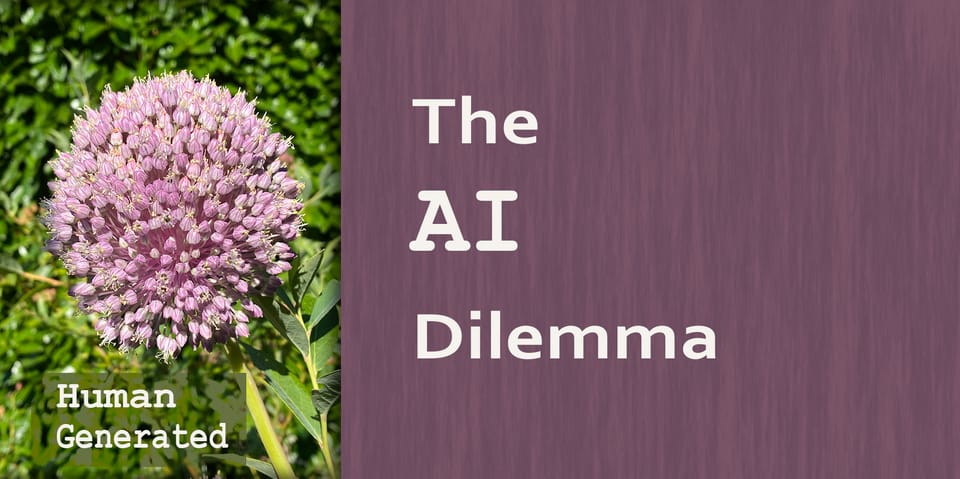
I never use generative AI for any purpose because of its enormous energy consumption. I hope other cli-fi writers feel the same because it is slowing efforts to reduce emissions as data centers gobble up electricity from the grid. Even old coal and nuclear plants are being reopened to feed the hungry beast of AI.
One year ago, the Authors Guild launched a certification system to allow writers to label their published stories as human authored as opposed to AI generated. It paints a grim picture when writers feel the need to label their work as a creation made by a human being, not a machine. With AI, anyone can prompt these software programs to regurgitate plots, characters, even whole texts that are derived artificially after consuming immense amounts of copyrighted work. AI companies are making a profit on their product without adequate compensation for the creative work that humans have produced, which is used as a model to train their programs.
The ease of generative AI poses a risk to the ability of climate fiction to get seen or read because of the huge volume of stories that might be belched out by the AI colossus, but writers are not just threatened by that type of competition. Even the interpretation of their work is now subject to machine automation. The Authors Guild, a hundred-year-old organization, fights for the legal protection of writers. They are representing authors' interests in the new savage jungle of AI use and abuse. Recently, the Guild has addressed concerns that Amazon is using AI to summarize and interpret any ebook that appears on the Amazon website.
According to the Authors Guild, Amazon’s new Ask the Book feature breaches the copyright of authors by using AI to create a derivative, interactive work without any license or compensation to the human creators. And though the company claims that AI training is not allowed with Ask the Book, that claim is subject to much suspicion. Authors cannot opt out of Ask the Book except by pulling their work from the Amazon site.
I am not sure readers will care. People around me, even environmentalists, seem to be succumbing to the temptation of AI. I have often seen AI being used to interpret long documents, even though it is known for getting facts wrong and making up answers. It's hard to understand why people fall for this when we risk a future where we won’t be able to figure out what is real.
Search tip: When searching online, add -ai at the end of any search term to avoid generating an AI answer (hopefully). Also, Firefox (after a new version releases on February 24, 2026) will let you block generative AI: https://support.mozilla.org/en-US/kb/firefox-ai-controls.
Hollywood is a good example of how dangerous this can become. AI actors, as in non-real, digital people, are now seeking representation by talent agencies. Also, documentaries might be using AI generated images and video to fill holes in their film archives. False facts, false video evidence, and even false actors are a real threat to creative livelihoods and a society grounded in truth. What should we believe anymore?

And yet, just as ebooks and print-on-demand technology increased access to independent publishing for writers who were locked out of the traditional publishing system, the use of AI opens up publishing to many new voices, even if they have no writing skills or talent. The problem arises when marketing a book. As supply outstrips demand, it becomes impossible to soar above the pack without lots of money or powerful connections, so nothing will really change for unknown authors. Still, generating your marketing videos and graphics via AI allows costs to come down, allows quality to improve, and makes it easier for everyone to get on TikTok to promote their work. It doesn’t solve the over-supply issue though. How do you even build your social media platform when social media is awash with content?
There could be some bright spots to this AI invasion for the climate. A new deal between Disney and Open AI will provide opportunities for fans to engage imaginatively with Disney’s licensed characters using an app to create short-form AI video. It's tempting to dream about how this could apply to cli-fi novels and inspire climate action, so that climate fiction becomes an even more powerful form of activism. Just imagine the opportunities for readers to explore steps toward sustainable living using your characters in short-form video or having them show up as digital AI characters to chat about climate issues and how to get involved. Could that help fix the climate crisis even though it would take enormous amounts of energy for every reader of your book to make your characters their climate friend? I don’t know if the tradeoff would be worth it. It would require a sustainably powered AI.
Of course, no matter what world we create with AI—one filled with creative potential or one filled with false, destructive narratives—those who understand the danger of this technology to hasten climate chaos know an AI future is fragile. If we are not fixing the underlying problem of a broken climate system, no AI induced reality will be a match for the destructive power of the physical world from an off-kilter climate. A broken climate system could bring any AI future to its knees and make it inoperable by destroying society’s economy.
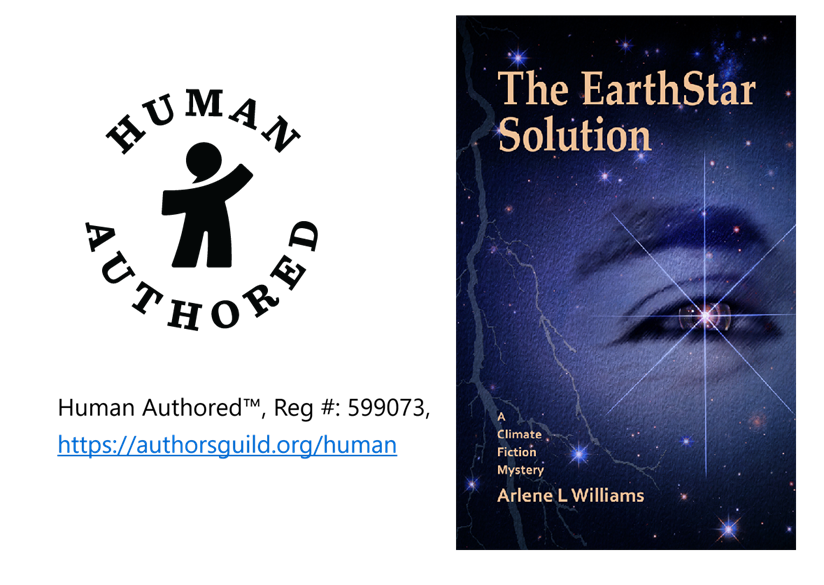
Like most of what we are faced with in this climate struggle, it is individual choice that will make the difference because governments are falling short. Just like we need to find ways to forgo fossil fuels in our everyday lives, we must ask ourselves this question: Do we use AI or not? AI seems to be unsustainable at the moment from a climate perspective, so I encourage you not to use it, not to read it, not to watch it if you have a choice. And look for books that are labeled human authored.
Member discussion