TRANSFORMATION STORIES
It has been hard to find new climate fiction that grabs my interest, but They Could be Saviors by Diana Colleen caught my attention by asking this question: What if the only way to save the planet is to kidnap the billionaires destroying it?

That is a very intriguing premise. I couldn’t resist finding out what that plot would look like or what solutions would come out of it. Plus, Kirkus Reviews called it “A unique and compelling exploration of topical issues.” They gave it a “Get it” recommendation, so I read the book.
This story is what I would call a transformation or healing story. It’s the kind of story I like to read as well as write, though for my own writing, I wouldn’t use the same methods of transformation she used—therapeutic techniques involving psychedelic drugs. Still, I really enjoyed the journey of these billionaire characters as they were forced to face the inner demons that drove them to destroy the climate for profit. There is a lot of tension in the story as you wonder how it will all work out. Will they cooperate or not?
Readers of this book probably won’t be real billionaires, despite the fact those types of people generally need a lot of healing. Colleen describes the ultra-rich as having a mental illness she calls billionaire-ism, an extreme form of hoarding. Yet even though readers won’t be billionaires, the story still has power. Regular readers will absorb the ideas inherent in the story, and this is important because of its underlying message that focusing on acquiring money and material things—instead of living a simpler life filled with family and friends—leaves you empty. While imagining the issues the billionaire characters in the book are working through, readers might be inspired to take new transformative steps themselves, or it may reinforce what they already understand about creating a meaningful life.
Transformation. That is what I wish for the very rich. I dream that these people with so much money and drive and power will switch into a more cooperative, less self-centered mode and do the right thing for the climate. That hope formed the foundation of my own novel The EarthStar Solution. This climate fiction mystery is the story of a hedge fund manager’s daughter who must change her father’s mind about the climate crisis. Tapping into the same wisdom as Colleen’s book, it speaks to the emptiness a pursuit of wealth brings and the lack of connection that results. They Could be Saviors tackles the same ideas with a much broader brush by targeting the richest men in the world—instead of my focus on just one wealthy man. The heart of both stories is similar, while the plot, the characters, and the outcomes are unique.

And that is the point of this post. To imagine the transformation of the future, we need all sorts of stories. Any writer addressing this conversion-of-the-rich theme will have their own perspective, and that is good. There is not one single story alone that can inspire every reader into action because a story may touch one reader’s psyche but not the next. And the more this message—that money and what it buys does not guarantee a happy life—embeds into our materialistic culture, the greater chance we have of making a real change in society to create a future that can be sustainable on Earth.
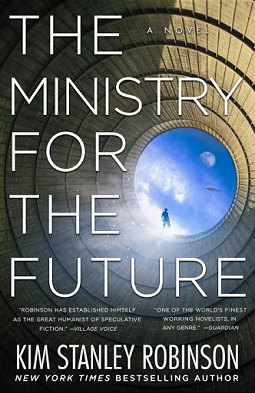
As a contrast with the story of healing in Colleen’s book and my book, I want to talk a moment about a very famous climate fiction called The Ministry for the Future by Kim Stanley Robinson. This book is a traditional science fiction story—very technical, complex, and imbued with disaster, revolution, and violence. It describes what most people assume will be the difficult path our future will take using conventional character arcs that don’t focus on the personal, transformative work that might make the difference. The Ministry for the Future is not a healing story, but for some people, it might be the novel they need to read to compel them to act. Though not totally devoid of hope, it is not a story that feeds me, so I haven’t reviewed it, but obviously it is a very important work.
I celebrate all three of these stories. No one knows how our struggle to fix the climate will end, but these stories are part of the solution. As I have always said: if we want things to change, we have to imagine it; so choose the type of story you are drawn to and settle down to take an imaginative journey that might guide you through this time of great change.


Member discussion